Roasting S’mores, First Take ~ by Tina S. Zhu

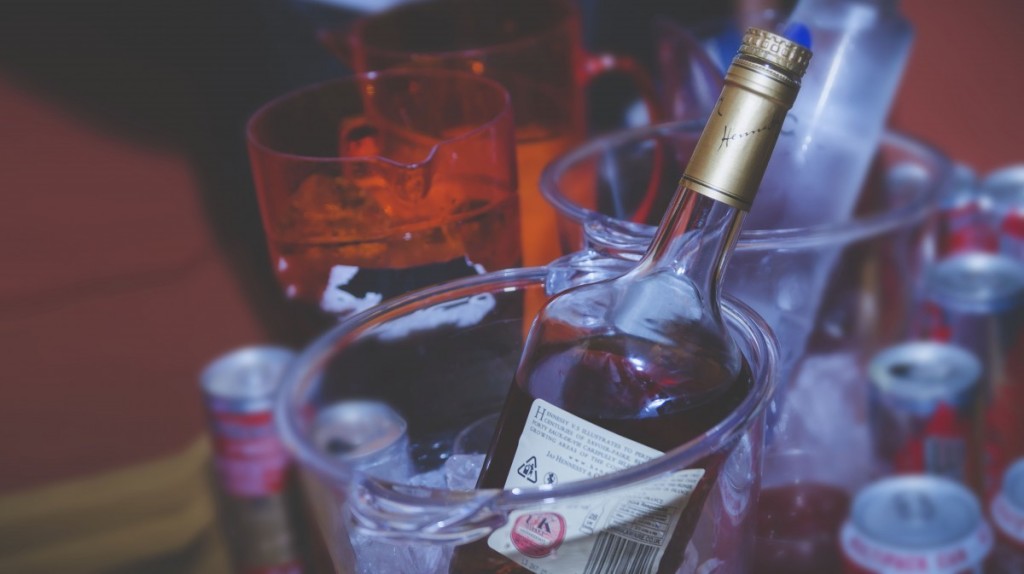
The drizzle smothers the campfire, leaving the contestants to scramble to save their marshmallows. We of the producers and crew wonder what Jessica would do. Would she go after Allison? This season’s hero, a twentysomething finance bro, has a type—either Allison, the All-American girl next door, or Jessica, the blond corporate bitch from Seattle. 

We had caught Jessica scoffing at Allison’s dream of becoming a good housewife and mother on Day 1. We watched as Jessica apologized but Allison only nodded as we hid around the corner armed with our phone cameras during the snack break. We deleted the footage from when they played video games together after bonding over their favorite TV shows later after we shooed away the other girls from the rec room for one-on-one footage.

We zoom into Jessica’s marshmallow dripping gloopy tears in the rain. She holds her lighter in the other hand and a wet cigarette flickers in her mouth, and she resembles a Virginia Slims model post breakup. She waves, then gives us the finger. The other girls think the finger was meant for Allison. We pan to their outraged reactions. 

Yesterday, we needed more footage for Jessica’s downward arc to foreshadow the hero choosing Allison over her in the final episode. When we asked them to fight over the final pancake, they were giggling like old friends the entire way through. When it was time for the orange juice, Jessica refused to knock the glass over. We knocked it over for her. Just a gentle flick was enough. The juice bruised Allison’s white sundress with orange she couldn’t wash out, and both their faces made for perfect shots.

The other girls gather around Allison, armed with soaked marshmallow sticks, protecting her from the rain and Jessica. Jessica flings her marshmallow stick with as much force as Marlboro Man punching a cowboy. The stick heads not toward Allison, but towards us. It breaks cleanly into two at our feet. 

You’re the real villains, we think she says, as the rain drowns out her voice.

We pick up the fragments of the stick. We take it back to the producer cabin to get a better shot under studio lighting. 

Once the rain stops, let’s film another take of the campfire scene again tomorrow, we say to ourselves. Let’s get the storyline right this time.

***

Tina S. Zhu writes from her kitchen table in NYC. Her work has appeared in Lightspeed, X-R-A-Y, Lost Balloon, Sundog Lit, and other places. She can be found at tinaszhu.com.

Two Questions for Kik Lodge

We recently published Kik Lodge’s mighty “What the Dead Take With Them.”

Here, we ask her two questions about her story:

1) What I love is that this story, simply by listing items, invites understanding of both the narrator and their late spouse. Is there anything else you think the narrator would have liked to include in their list that they didn’t quite get to?
I think if the narrator dug down to the kernel – perhaps with a psychologist on his return from Greece – he’d unearth a man who’s not especially keen on himself. Who gets erratically angry. Who drinks too much. Who avoids. So perhaps a later sorry might be “sorry I thought mental health never mattered”, because it so very clearly might have helped him.  

2) That line about un-remembering is so devastating. What would our narrator un-remember if they could? The ways they let their spouse down? The ways they will miss them?
I think our narrator would definitely like to unremember the face in the locket, because it’ll likely haunt him in bed at night, yanking the foundations of not only his relationship with his partner, but rattling his own self-worth. Hence the need for psychological support and grief work. I think our narrator is a good man, one who’s trying to be a better man a little too late. I really hope that over time he’ll manage to revisit the beautiful and less beautiful moments he had with his partner without them being eclipsed by that face in the locket. I really do hope he can heal.

What the dead take with them ~ by Kik Lodge

A locket with another man’s smile inside. A fistful of forget-me-nots. An inventory of sorrys in your cardigan pocket. Sorry I could never stop after one pint. Sorry I didn’t clap at quiz night when you shimmied, it’s just there were these guys at the bar saying all sorts. A bumper book of 1000 jokes, every page dog-eared. Silk ribbons from dance shoes looped round and round your calves. Kiss jelly fantasy nails. That daft poem I wrote. Sorry I said we’re too old for this, whenever life offered us fun. A Super Auntie mug because tea heals people, even though we all know it was your listening. Our Bertie’s postcards. A sparkly top you wore that evening in the Dales when you’d been told, and I blubbered at the sunset and you said come here you big softie. I’d have put that sunset in if I could. Your posh brooch whose pin pierced your tit as I poked it through your blouse because I wasn’t thinking straight, but you didn’t bleed, corpses never bleed – their hearts are done pumping. Sorry we never got to Greece. You always wanted to go to Greece. And now I’m drunk on Zakynthos, your urn on my lap, watching bits of you ballet into the Ionian, wondering if us humans can ever un-remember things; the feeling of never loving enough, or never loving right, and that shitty little throat-squeeze from another man’s smile.

***

Kik Lodge is a short fiction writer from Devon, England, but she lives in Lyon, France with a menagerie of kids and cats. When she is not writing, she is not cooking or running either. Erratic tweets @KikLodge.

Two Questions for Dallon Robinson

We recently published Dallon Robinson’s gorgeous “Between Us Girls.”

Here, we ask him two questions about his story:

1) I love how vivid each of the characters is — they become so real to the reader in such a short period of time! How did you decide what details to use to flesh these girls out?
Characterisation is my favorite part of writing and is very intuitive for me. I like to see characters as real people and let them grow organically, but being intentional about what type of details will best illuminate the story, and the vessels which they’d be best shown. My favorite vessels here are the secrets and their childhood bedrooms; both are so universally intimate but also intimately specific, and the reveals paralleling each other suggests the details of the girls’ pasts being another layer of secrecy, another level of intimacy they share. 

2) The relationships here are so powerful! I love how the girls cling to each other, as friends, as romances, as coworkers — such intensity of feeling here! Do you think if the setting weren’t a funfair (say, a Burger King or something) that the relationships would stay the same? Or would there be more of a distance between the girls?
The idea started as “girls working at a funfair”, so it’s hard to imagine them anywhere else! But I think they’d have a similar closeness in a setting like a Burger King or any setting where, as a worker, you’re constantly interacting with a world that won’t always interact back. That’s where their need for each other’s closeness comes from, which the funfair elevates as it’s always moving, always the same but never grounded, participating in people’s memories in ways they likely won’t remember. So amongst this, the girls ground themselves into a world shaped by the funfair but also their relationships with one another within it, even when feelings and desires don’t align.

Meanwhile Devon is between two worlds: her life before with her brother and her life at the funfair, and she too holds onto relationships to ground herself, becoming so attached to the star girl and not wanting to leave her. After which, the girls’ comfort is what finally fully brings her into their world — one that was shaped by the funfair but beams beyond, that includes their past but keeps it there, that includes their conflicts but still keeps them all together. 

Between Us Girls ~ by Dallon Robinson

Devon’s the new girl running the Duck Pond game, who won’t talk to us. She doesn’t want us knowing she’s here, that she loves funnel cake and uses tampons. We think she’s sweet and wonder how she ended up at a funfair – something we never ask about ourselves.

One by one, we help her out. Jeannette cleans off the slushy a child flung at her. Zara rubs her back whenever she pukes beer. Ro keeps telling her, don’t believe Avery from the Orbiter if he gushes about your starry eyes. We help because that’s what us girls do; we check each other’s payslips and hound at Jerry whenever it’s wrong; we guard bathroom stalls, share ibuprofen, check each other’s breasts for lumps.

Before we leave Maxie lets Devon and her baby brother ride the bumper cars and that’s why she’s here, we learn, ‘cause he wants to be an astronaut and she never got a college fund, how she can’t stand living with her parents who can’t stand her. Here she can save up, send him popcorn-greased postcards and slip a rocket from the prizes. We let her keep this secret and share our own. Ro dulls her darts so it’s harder to puncture the balloons. Zara fingers Maxie on the Zipper. Jeannette thinks we can’t hear her vibrator. How, two towns ago, Avery tried it on Ro again and Maxie almost knocked his teeth out. How we like to chill by feeding each other cotton candy, sugar licked from fingers. How all us girls have a bracelet; we try to match the beads on Devon’s to the solar system, mix in glittered stars. She wears it on shift and at night she bites cotton candy and gives it to us like that, the sugared clack of our teeth.

We’re in the next town for a week. We all notice the girl who spends every evening playing Duck Pond, smiles at Devon against buttery sunsets. She’s got stars tattooed above her collarbones and we know Devon’s look cause it’s the same look between Maxie and Zara, that Ro once gave Avery. Devon laughs and shows off her bracelet, lets star girl touch the stars. Us girls know what’s happening, know how Jeannette wanted Maxie but Maxie wanted Zara to want her and turns out she did, and sometimes Jeanette still cries to Ro. By Friday Devon is quiet again, gets giddy at sunset, picks cotton candy with her fingers and won’t ask us how to blot concealer over a hickey. We don’t know how to help, can’t stop the weekend breezing past. Us girls sweaty, packing our lives into vans and cars, looking for dropped jewellery amongst muddy grass.

Devon doesn’t want us to know she’s crying in gas station bathrooms, at the motel’s ice machine. So we bring her in, us girls sardined together, let her cry in our bathroom, and one by one we love on her. Jeanette unravels her bun, smooths out tangles with her fingers. Zara feeds her funnel cake. Ro tells her about the time she caught Avery kissing in the funhouse and dragged his ass out in front of everyone, almost got fired. We all laugh. Maxie asks about her brother, listens to how Devon memorised the solar system before she left and imagines him asleep on each planet to fall asleep. We tell her about our childhood bedrooms: Ro who misses how moonlight sheened through her pink bed canopy even if it felt like sleeping in a fly trap, Jeanette who used to drink beer out of her dance trophies; Zara who carved blocky dinosaurs onto her vanity, Maxie who shared with her brother until one day they couldn’t and didn’t understand why. We tell her about the fathers who never looked at us or looked too much, the mothers who miss us or the idea of us girls, us dolly ribboned daughters. We all cry, ‘cause this is just like when we learnt about Avery, when Jeannette learnt about Maxie and Zara; when Ro’s granny died, when our parents called too much or stopped completely. Us girls huddled, all beaded together. And when Devon apologises we say don’t, we’ll keep this between us girls. We’ve all seen each other cry on linoleum. We’ve all gotten snot on each other’s shirts.

***

Dallon Robinson (he/him) is an autistic and transmasculine writer who loves funfairs even if they give him headaches. His writing can be found in Stone of Madness, Reservoir Road, The White Pube and Popshot Quarterly. He can be found on Twitter/Bluesky/Instagram at dallonwrites.

Two Questions for Joanna Theiss

We recently published Joanna Theiss’s beautiful “This is a Dog.”

Here, we ask her two questions about her story:

1) I love the relationship between the narrator and Brownie — there is a level of trust and love and familiarity, but at the same time, this underlying tension. The narrator chose Brownie because Brownie was the dog no one would choose. Do you think Brownie would have chosen the narrator in return?
If Brownie had been allowed to review the narrator’s résumé, I doubt she would have chosen her. The narrator has never owned a dog, has no idea how to train one, and feeds Brownie kettle corn! Most shelters vet potential dog owners more than Second Chances did in this story because they knew that Brownie was prone to biting, so they foisted her off on whoever would take her. Fortunately for Brownie, the narrator loves her immediately and wants to do right by her. She makes a place for Brownie in her home and, most importantly, provides tenderness and grace when Brownie makes mistakes. I like to think that Brownie recognizes she got a pretty good deal, in spite of the narrator’s lack of experience. 

2) And the ending! Oh, that ending! I adore how much the narrator reveals about themself and their belief in love. What will become of this pair, do you think? Or can you say?
It was love at first sight for the narrator, who cast off all of the perky lap dogs in favor of her. The narrator’s protectiveness kicked in when Brownie bit the neighbor, or possibly before, when she saw how the volunteer at Second Chances didn’t bother to advertise Brownie’s attributes. When Brownie gets sick, the narrator is willing to put her own body at risk to care for her. The love the narrator has for Brownie — and owners have for their dogs in general — is so pure: she loves Brownie regardless of whether Brownie reciprocates that love. In the last lines, the narrator is trying to understand how it might be for Brownie, who is not only an entirely different species than her, but who has also been abused and hasn’t encountered many loving humans. It’s a bittersweet feeling, and I’m glad it came across. 

Because this story is loosely based on a friend’s experience with a foster dog, I imagine a happy future for Brownie and the narrator. I like to think the seriousness of the bite makes the narrator realize she needs help training Brownie, and she finds a sympathetic veterinarian who will treat Brownie’s eye. Once they’re both healed, I imagine them watching crime procedurals and eating snacks (though maybe jerky strips for Brownie instead of kettle corn) for many years to come. 

This is a Dog ~ by Joanna Theiss

This is how I get Brownie. A volunteer at Second Chances Animal Rescue offers me five different dogs: a cocker spaniel with missing teeth, a puppy that licks and grins and doesn’t know heartache, a chihuahua with a full-body tremble, a cowering terrier, a miniature poodle the same shade as gutter water.

These are those dogs’ names: Poppy, King, Trixie, Ella, Princess.

These are the ways the volunteer praises the dogs: doesn’t bark, good with kids, gets along with cats, doesn’t mind being alone, fits in your purse.

This is the volunteer, thinking she gets me.

This is me, walking away from those dogs and kneeling in front of a brown one with half an ear, a muscular chest and a wide stance, the dog whose name is the color of her fur. The dog who is staring into me as the volunteer says, “This one’s also up for adoption.”

No better than if she said, “This is a dog.”

*

This is Brownie and me watching reruns of “Law & Order: SVU” and eating kettle corn that clings to our teeth.

This is Brownie, leaning against the cushions like a little queen.

This is the scene when the kid stabs her abusive stepfather and this is when Brownie nods and her hazel eyes say, “Good girl.”

This is the yellow blankie that Brownie wears like a cape.

This is the dream she has when she paddles the air with her feet: she is swimming through a cold lake in summer while I toss her a ball that she catches, effortlessly, in her milky-pink mouth.

This is how Brownie brings each piece of kibble to my feet and eats only when I eat, this is how her body, snuggled under the covers, rumbles like an engine and shakes the mattress on its frame.

This is how Brownie enters my bloodstream like a virus, this is how she travels through my veins and pumps into my heart. This is how she burrows in.

*

This is Brownie, dozing lightly, square head on skinny paws.

This is the neighbor who stands too close and ignores my warnings.

This is Brownie, sinking her teeth into his thigh just as he says he’s very good with dogs.

This is the animal control officer explaining the law about dangerous animals: “In this state, a dog gets to bite once. If she bites twice, she goes bye-bye.”

This is Brownie, nosing the bright splatters of blood the neighbor left on my porch.

This is me, a woman who doesn’t know dogs, who assumes muzzles are cruel, and who figures Brownie must have seen something in the neighbor she didn’t like.

*

This is the morning when Brownie rubs her face on her blankie and makes a sound I haven’t heard before, like a growl interbred with a whine.

This is Brownie’s eye weeping a whitish fluid.

This is Brownie’s eye turning red and then swelling shut.

This is Brownie’s breakfast, untouched.

This is Brownie’s blankie, abandoned.

This is the internet, telling me she needs a vet to flush her eye, telling me that Brownie is hurting and needs painkillers, antibiotics.

This is me remembering the animal control officer and the one-bite rule.

This is me knowing there are no second chances for dogs like Brownie.

This is the washcloth that will clean Brownie’s crusty, angry eye, the care that will maybe keep Brownie out of a crowded waiting room, maybe keep her teeth out of a vet’s hand.

This is the washcloth touching down on Brownie’s face.

This is me, thinking I get her.

*

            This is the pain, not arriving all at once but trickling in slowly like water from a leaky faucet until the pain is a pool and I’m wading in it.

This is me, with a puncture in the meaty part of my hand, thinking I was doing the right thing picking the dog no one wanted, no one bothered to get to know, no one cared enough to give a name worth remembering.

This is the dog who crawls to me in a crouch, whose whimper comes from low in her belly. This is the dog’s way of apologizing, of wishing she could take it back, of explaining that she didn’t know love until me and she isn’t sure, even now, if it’s real.

But this. This is only a guess.

***

Joanna Theiss (she/her) is a lawyer-turned-writer living in Washington, DC. Her short stories and flash fiction have appeared in Peatsmoke, Bending Genres, The Florida Review, Anti-Heroin Chic, Fictive Dream, and Best Microfiction 2022. Links to her writing are available at www.joannatheiss.com.

Two Questions for Rina Olsen

We recently published Rina Olsen’s powerful “Bataya Slums, 1971.

Here, we ask her two questions about her story:

1) You’re a junior in high school, yet you bring to life this place and time before you were born — and the details all feel so authentic! How did you come to choose this particular subject for your story?
As of late, I’ve grown increasingly interested in exploring my identity as a zainichi Korean. After being forcefully brought to Japan during the Japanese Occupation to replenish the country’s dwindling labor force and resource supply (due to the Second Sino-Japanese War), my great-grandfather and his family could not return to Korea after World War II. For generations my family stayed in Japan and, like many other zainichi Koreans, faced—and continue to face—severe racial discrimination. “Bataya Slums, 1971” is a reflection of this: particularly in the 1960s and 1970s, unable to find work elsewhere, many zainichi Koreans had to make money by collecting scraps for recycling, and wound up living in the bataya (meaning “ragman” or “rubbish man”) slums close to their “workplace.” When I saw the black-and-white photograph of a bataya slum on the History Museum of J-Koreans website, I immediately found myself reaching for my journal. It took a few tries, but once I got the structure down the details came quickly (with a bit of research for the pop cultural references, of course). One might say that this was an ekphrastic piece, but it was also drawn from the intergenerational trauma of suppressing one’s identity to blend in, as well as trying to answer the question of whether a “forever foreigner” can ever truly belong in the country they were born in.

2) All the imagery is powerful, but for me, this line — “We pick up the votes our fathers wanted to cast and stow them in our pockets” — is so breathtaking. Here, you are telling the reader so much about the characters and their lives. What made you decide to include this particular line?
This line was mostly in tribute to my grandfather, who passed away before I was born. Zainichi Koreans still do not have widespread suffrage, and my grandfather never got to vote in his life. I included this particular line to draw attention to the fact that even in the 21st-century, zainichi Koreans are not granted full civil liberties, and how the characters, seeing their immigrant fathers’ inability to achieve the dream of becoming “native,” do the opposite of their forebears and exchange their freedoms for safety. But I also think that through this line, I wanted to tell my grandfather not to worry, because here on Guam our family is able to vote without being barred by discriminatory laws. I did add some other references to whatever I could gather about my grandfather (the newspapers he used to read; the Hi-Lite cigarettes he smoked), but I primarily decided to include this particular line to mourn the fact that he lived out his adulthood in a country that refused to accept his opinion simply because of his ethnicity.

Bataya Slums, 1971 ~ by Rina Olsen

This is how we unlearn the foreign body:

We pick up glass bottles with our bare hands. We pick up cardboard—soggy. We pick up old takoyaki boxes, slick with grease, and splintered chopsticks stained with brown sauce. We pick up tea-stained newspapers and place bets on how much the tea and paper cost. We pick up charred wood, pick up used rags. We pick up Coca-Cola cans, their cold kiss on our fingers supplanting the nonexistent fizz in our throats. We pick up the flecks of spit that fly from our lips when we make our rounds, chanting kuzui oharai, kuzui oharai. We pick up the ju sounds that flick from our foreign mouths and twist them into a natural zu. We pick up grocery bags: cloth and plastic. We pick up Olympus Pen cameras. We pick up shoes without the laces. We pick up laces without the shoes. We pick up babies’ shoes, clearly worn, and scraps of clothing with too many holes to take home to our sisters. We pick up boxes of Hi-Lite cigarettes—empty, of course. We pick up Orion’s Cocoa Cigarette boxes (“we support your non-smoking”). We pick up Pinky Chicks albums. We pick up movie posters for Immortal Love and Go, Go, Second Time Virgin. We pick up old leather belts, the kind with the brass buckles. We pick up our mothers’ voices, the ones that say come home quickly instead of don’t forget to buy fish. We pick up snow shovels with jagged tears in the soft red plastic. We pick up see-through plastic PET bottles. We pick up the shrill screams of children at the park, half a block away, and the excited pulse of their running footfalls. We pick up the votes our fathers wanted to cast and stow them in our pockets. We pick up used Pilot ballpoint pens and all the words that drained out of them. We pick up how to recycle. This is how we recycle. We recycle. Recycle.

***

Rina Olsen, a rising high school junior from Guam, is the author of Third Moon Passing (Atmosphere Press, June 2023). She edits for Polyphony Lit, Blue Flame Review, and Cathartic Youth Literary Magazine, and she was invited to be an instructor for Polyphony Lit’s Summer 2023 writing workshop Around the World of Poetry in 80 Days. Her work has been recognized by the John Locke Institute, the Walt Whitman Birthplace Association, the Sejong Cultural Society, and Guam History Day, and her most recent writing has either appeared in or is forthcoming in The Round, Thimble Literary Magazine, and Sophon Lit. Visit her at her website: https://rinaolsen.com.

Two Questions for Francesca Leader

We recently published Francesca Leader’s powerful “Let Me Try To Make It Interesting.”

Here, we ask her two questions about her story:

1) “Let me try to make it interesting,” our narrator tells us, but she could also be saying “let me tell this story in a way I can bear to tell it. Let me share this story the way it could have happened instead.” Do you think it would be harder for her to tell her story in a way that wasn’t “interesting”?
That might well be the case, but it wasn’t what I had in mind. I actually started writing this piece as a subversion of “strangeness for its own sake,” which I think results from using surrealism/irrealism solely to add charm or novelty. I think this approach can render a piece of writing lifeless. I tend to write realism because I feel best able to convey emotion that way. To my own surprise, as I was writing this piece, I noticed the metaphors taking on a life of their own, and telling a story of trauma in a way that felt authentic to me. By the end of it, I thought the story really was more interesting told this way, as a sort of parable, than it would have been if narrated realistically.

2) And at the end, we learn the “real story.” One of escape and freedom and inner strength. Will our narrator keep telling variations of this (her?) story throughout her life? Or is she ready to move on to a new story?
I do see the narrator leaving this story behind and moving on to a new one. However, I don’t think this means she’s on an “onward and upward” trajectory, never to repeat the same mistakes. I don’t think understanding who she is and what she deserves will necessarily save her from being ensnared or hurt again. It will, however, empower her to more quickly and easily liberate herself the next time.